
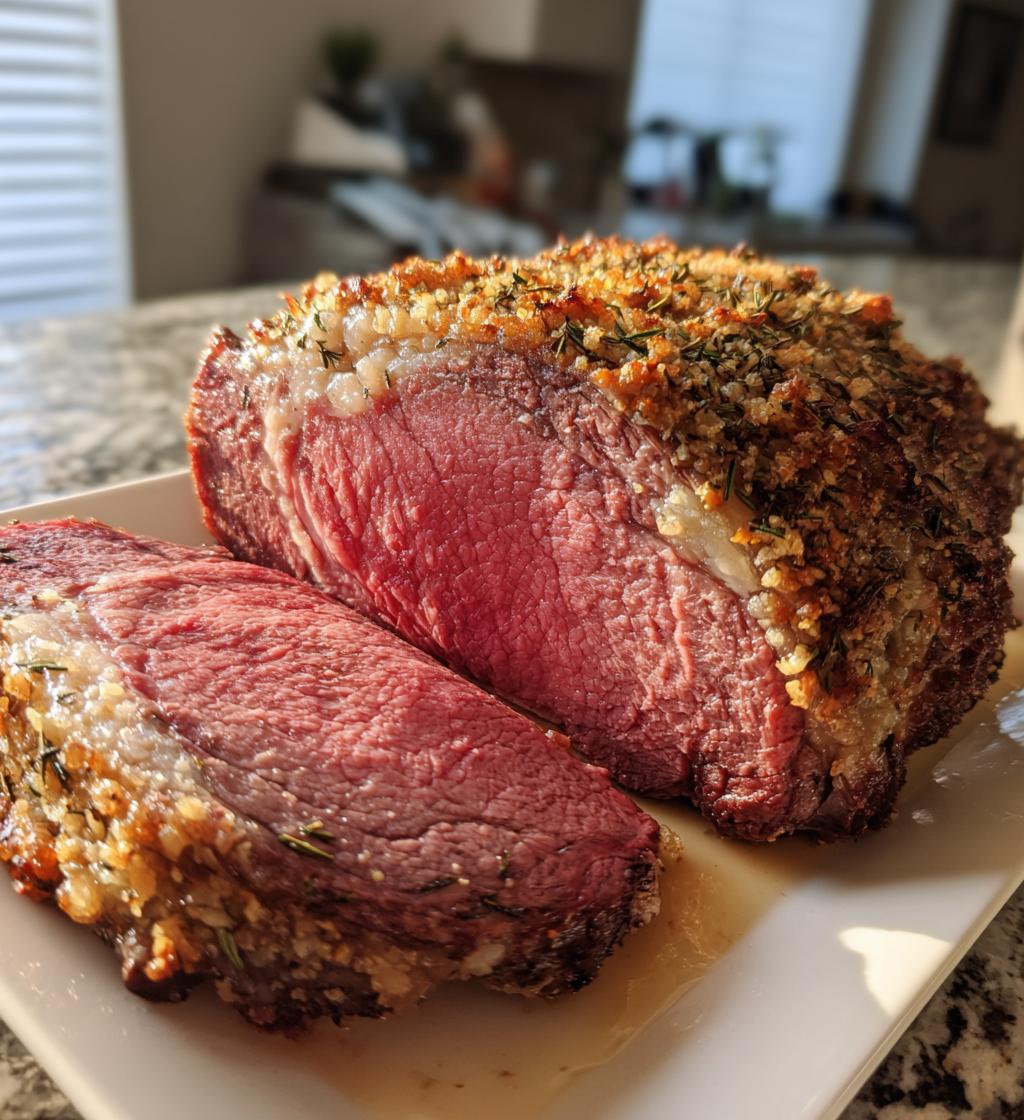
Oh, prime rib roast—just saying those words makes my mouth water! There’s nothing quite like that first slice of perfectly cooked prime rib, all juicy and pink in the center with that gorgeous crust on the outside. It’s the star of every holiday table in my house, and once you learn how to cook prime rib roast the right way, it’ll be the star of yours too.
What I love most is how simple it is to make something so impressive. With just a few good ingredients and some patience (that resting time is crucial!), you can create this melt-in-your-mouth masterpiece. The rich, beefy flavor paired with those crispy herbed edges? Absolute perfection. Trust me, once you’ve had homemade prime rib roast, you’ll never go back to those dry, overcooked versions some restaurants serve.
Ingredients for How to Cook Prime Rib Roast
Let’s talk ingredients – because with prime rib, simple is best! You want those beefy flavors to shine, so we’re keeping the seasoning straightforward but powerful. Here’s exactly what you’ll need:
- 1 prime rib roast (4-5 lbs) – Look for “standing rib roast” at the butcher. Bone-in gives more flavor, but boneless works too. That fat cap? Leave it – it’s your flavor insurance!
- 2 tbsp olive oil – Just enough to help the spices stick and get that gorgeous crust
- 2 tsp salt – Kosher salt is my go-to for even seasoning
- 1 tsp black pepper – Freshly cracked makes all the difference
- 2 tsp garlic powder – Trust me, powder sticks better than fresh here
- 1 tsp rosemary – Crush it between your fingers to wake up the oils
- 1 tsp thyme – The perfect partner for rosemary
See? Nothing fancy – just quality ingredients that let the beef be the star. Pro tip: take your roast out of the fridge about 2 hours before cooking. Room temp meat cooks more evenly!
How to Cook Prime Rib Roast
Preparing the Roast
This part is where the magic starts! First, pat your roast dry with paper towels – a dry surface means better browning. Now, drizzle that olive oil all over and really rub it in like you’re giving the roast a nice massage. Mix your salt, pepper, garlic powder, rosemary and thyme together, then sprinkle it generously on every surface. Don’t be shy – this crust is going to be incredible! Place it fat side up in your roasting pan (those juices will baste the meat as it cooks). Pro tip: If you’ve got time, let it sit with the seasoning for an hour before cooking – it makes the flavors penetrate deeper.
Roasting the Prime Rib
Here’s my foolproof method: Crank your oven to 450°F – yes, that hot! Roast it uncovered for exactly 15 minutes to get that beautiful sear. Then, without opening the door, reduce the heat to 325°F. Now the slow cooking begins. For medium-rare (the perfect doneness for prime rib), cook about 15 minutes per pound. But listen – the only way to know for sure is with a meat thermometer. At 135°F internal temp, it’s done. Any hotter and you’ll lose that perfect rosy center. If the crust is getting too dark? Tent it loosely with foil, but don’t wrap it tight!
Resting and Slicing
Here’s where most people mess up – they cut into it right away! Resist! Transfer your roast to a cutting board and walk away for 20 minutes. I know it’s hard, but those juices need time to redistribute. This resting period is what separates a good prime rib from a great one. When it’s time to slice, find the direction of the grain (those long muscle fibers) and cut straight across them. Thick slices – about 1/2 inch – show off that beautiful pink interior best. And save those pan juices! Drizzle a little over each slice for extra beefy goodness.
Tips for Perfect Prime Rib Roast
After making more prime rib roasts than I can count (and yes, a few disasters along the way!), I’ve learned some tricks that guarantee success every time. These are my absolute must-know tips for the juiciest, most flavorful roast:
Invest in a good meat thermometer
Don’t trust cooking times alone – every oven and every roast behaves differently! My digital instant-read thermometer is my kitchen lifeline. Insert it into the thickest part of the roast, avoiding bones or fat pockets. For medium-rare perfection, pull it at 135°F (it’ll rise to 145°F while resting). No thermometer? You’re basically cooking blindfolded!
Season generously but wisely
That thick crust needs seasoning, but don’t go crazy with too many flavors. Stick to salt, pepper, garlic, and herbs – they enhance the beef without overpowering it. Here’s my trick: season until you think it’s enough…then add just a tiny bit more. The seasoning mellows during cooking, so what seems like a lot raw will be perfect cooked.
Let the meat come to room temperature
I know it’s tempting to rush this step, but taking your roast out of the fridge 2 hours before cooking makes a HUGE difference. Cold meat cooks unevenly – you’ll end up with an overcooked exterior before the center reaches temp. Just leave it on the counter (covered loosely) while you prep everything else.
Don’t skip the resting time
I know, I know – that resting period feels like torture when your kitchen smells amazing. But cutting too soon lets all those precious juices run out instead of staying in the meat. Set a timer for 20 minutes – use that time to finish your sides or make a quick pan sauce with those delicious drippings!
Cook fat side up
That thick fat cap isn’t just for looks – it’s nature’s basting system! As it renders during cooking, the fat drips down through the meat, keeping every bite succulent. Never trim it off before cooking (you can remove excess after if you prefer). Position it on top in the roasting pan and let it work its magic.
Prime Rib Roast Variations
Now that you’ve mastered the classic version, let’s play around with some delicious variations! The beauty of prime rib is how well it adapts to different flavors while still letting that incredible beefiness shine through. Here are my favorite twists that always impress guests:
Herb and Spice Swaps
While I adore the classic rosemary-thyme combo, sometimes I mix it up with:
- Smoky paprika rub: Replace the herbs with 2 tsp smoked paprika + 1 tsp ground cumin for a deep, earthy crust
- Mustard crust: Spread a thin layer of Dijon mustard before the seasoning – it creates an incredible savory crust
- Coffee-chile rub: Sounds wild, but 1 tbsp finely ground coffee + 1 tsp ancho chile powder makes a rich, complex crust
- Garlic-herb paste: Mash 6 cloves roasted garlic with the olive oil and herbs into a paste that clings perfectly
Bone-In vs Boneless
Both have their merits! Bone-in (my personal favorite) gives richer flavor from the marrow and cooks more evenly with the bones acting as natural heat conductors. Boneless is easier to carve and often more economical. Pro tip: If using boneless, tie it with kitchen twine every 2 inches to help it keep its shape during roasting.
Alternative Cooking Methods
While oven-roasting is classic, try these methods for fun variations:
- Reverse sear: Cook at 250°F until 120°F internal, then blast at 500°F for 10 minutes for extra crust
- Smoked prime rib: Low and slow on the smoker at 225°F with hickory or oak wood adds incredible depth
- Sous vide: Cook vacuum-sealed at 132°F for 6-8 hours, then quick sear for perfect edge-to-edge doneness
The best part? Once you’re comfortable with the basic technique, you can get creative and make the recipe your own. Just remember – no matter what variation you try, that resting period and proper temperature control are non-negotiable for juicy results!
Serving Suggestions for Prime Rib Roast
Now for the best part – serving up that gorgeous prime rib! After all that careful cooking, you’ll want sides and sauces that complement without competing. Here are my tried-and-true pairings that always get rave reviews:
Must-Have Condiments
You’ll want something with a bit of zing to cut through the rich beefiness:
- Horseradish cream: Just mix prepared horseradish with sour cream and a pinch of salt. Start with 1 tbsp horseradish per 1/2 cup sour cream and adjust to your heat preference!
- Au jus: Those pan drippings mixed with a splash of beef broth make the simplest, most delicious sauce. Skim the fat first if you prefer.
- Red wine reduction: A little fancy for Sunday dinner? Maybe. Worth it? Absolutely. Simmer 1 cup red wine with the pan drippings until it coats the back of a spoon.
Perfect Side Dishes
The sides should be simple enough to let the roast shine:
- Yorkshire puddings: The classic pairing! Those crispy, eggy cups are made for soaking up juices.
- Creamy mashed potatoes: Silky smooth or rustic and chunky – either way, they’re prime rib’s best friend.
- Roasted vegetables: Carrots, parsnips, and Brussels sprouts caramelized in the same oven as the roast? Yes please!
- Simple green salad: Something fresh and crisp balances the richness perfectly.
My golden rule? Keep portions generous but plates uncluttered. Let that beautiful prime rib be the center of attention it deserves to be!
Storing and Reheating Prime Rib Roast
Okay, confession time – in my early cooking days, I ruined more leftover prime rib than I care to admit by tossing it straight into the microwave. Dry, rubbery disaster! But after years of trial and error (mostly errors), I’ve perfected how to store and reheat prime rib roast so it stays almost as good as fresh.
Storing Leftovers Properly
First rule: don’t leave it sitting out! As soon as your meal’s done, wrap those precious slices tightly in foil or transfer to an airtight container. They’ll keep in the fridge for 3-4 days. For longer storage, freeze individual portions wrapped in plastic wrap then foil – they’ll stay good for 2-3 months. Pro tip: Label with the date! Frozen prime rib looks suspiciously like other mystery meats after a while.
The Right Way to Reheat
Microwaving is the enemy of good prime rib – it zaps all the moisture right out. Here’s my foolproof method:
- Preheat your oven to 250°F (low and slow is key!)
- Place slices in an oven-safe dish with a splash of beef broth or au jus
- Cover tightly with foil to trap steam
- Heat for about 15-20 minutes until just warmed through
For frozen slices, thaw overnight in the fridge first. And here’s a chef’s secret – sometimes I actually prefer leftover prime rib cold! Thinly sliced on a sandwich with horseradish mayo? Absolute perfection.
Creative Uses for Leftovers
If you’re tired of plain reheated slices (though I never am), try these delicious ideas:
- Beef hash: Dice and sauté with potatoes and onions for breakfast
- French dip sandwiches: Pile on crusty bread with melted Swiss and au jus for dipping
- Beef fried rice: Small cubes add incredible richness to this quick meal
- Prime rib tacos: Warm slices in a skillet with your favorite taco toppings
Remember – even the best storage methods can’t bring back severely overcooked meat. That’s why getting the initial cook right (and not skipping that resting time!) makes all the difference for leftovers too.
Prime Rib Roast FAQ
Over the years, I’ve gotten so many questions about prime rib roast – and I love helping people avoid the mistakes I made early on! Here are the answers to the most common questions that come up when learning how to cook prime rib roast:
Can I cook prime rib roast from frozen?
Technically? Yes. Should you? Absolutely not! Cooking from frozen leads to uneven cooking – you’ll end up with an overcooked exterior while the center stays cold. Always thaw completely in the fridge (this takes about 24 hours per 5 pounds). If you’re in a pinch, submerge the vacuum-sealed roast in cold water, changing the water every 30 minutes until thawed.
How do I prevent my prime rib from drying out?
Three words: thermometer, resting, fat. Use that meat thermometer religiously – overcooking is the #1 cause of dryness. Let it rest properly (yes, I’ll keep harping on this – it makes THAT much difference!). And never trim that fat cap before cooking – it bastes the meat as it renders. Bonus tip: If your roast looks dry after slicing, drizzle some warm au jus over it to bring back moisture.
What are the best side dishes for prime rib roast?
You want sides that complement without competing! My must-haves are creamy mashed potatoes (for soaking up juices) and something crisp like roasted Brussels sprouts or a simple green salad. Yorkshire pudding is the traditional pairing – those puffy cups are made for prime rib drippings! For holidays, I’ll add roasted root vegetables and maybe some creamed spinach for extra decadence.
Should I cook prime rib bone-in or boneless?
I prefer bone-in for flavor and even cooking (those bones act like little heat conductors!), but boneless works great too. If using boneless, tie it with kitchen twine every 2 inches to help it keep its shape. Pro tip: Ask your butcher to cut the bones off and tie them back on – you get the flavor benefits with easier carving later!
Why does my prime rib crust burn before the inside cooks?
Ah, the classic dilemma! This happens when the oven’s too hot for too long. My method solves this: start with a 15-minute blast at 450°F to sear, then immediately lower to 325°F for gentle cooking. If the crust is getting too dark before the interior reaches temp, tent loosely with foil – but don’t wrap tightly or you’ll steam the meat instead of roasting it.
Remember – every roast and every oven behaves a bit differently. The more you practice, the more you’ll develop that perfect timing for your specific setup. But with these tips, you’re already way ahead of where I started!
Nutritional Information
Now, let’s talk numbers – because while prime rib roast is definitely a special occasion dish, it’s nice to know what you’re enjoying! Keep in mind these values can vary based on the exact cut of meat and how much fat you leave on, but here’s a general idea per 6-ounce serving:
- Calories: 450
- Fat: 32g (12g saturated, 16g unsaturated)
- Protein: 38g
- Carbohydrates: 1g
- Sodium: 480mg
- Cholesterol: 120mg
A few things to note: The fat content will be higher if you eat more of the outer fat cap (though that’s where so much flavor lives!). The sodium can vary based on how generously you season. And if you’re watching carbs – good news! Prime rib is naturally low-carb, especially if you go easy on the starchy sides.
My philosophy? This is celebratory food meant to be savored, not stressed over. Enjoy every juicy bite – you’ve earned it after mastering how to cook prime rib roast perfectly!
Print
Juicy 5-Pound Prime Rib Roast Recipe That Melts in Your Mouth
- Total Time: 1 hour 45 minutes
- Yield: 6 servings 1x
- Diet: Low Lactose
Description
Learn how to cook a juicy and flavorful prime rib roast with this simple recipe.
Ingredients
- 1 prime rib roast (4–5 lbs)
- 2 tbsp olive oil
- 2 tsp salt
- 1 tsp black pepper
- 2 tsp garlic powder
- 1 tsp rosemary
- 1 tsp thyme
Instructions
- Preheat your oven to 450°F.
- Rub the roast with olive oil and season with salt, pepper, garlic powder, rosemary, and thyme.
- Place the roast on a rack in a roasting pan, fat side up.
- Roast for 15 minutes, then reduce the heat to 325°F.
- Cook for about 15 minutes per pound for medium-rare (internal temperature of 135°F).
- Remove from the oven and let it rest for 20 minutes before slicing.
Notes
- Use a meat thermometer for accurate doneness.
- Letting the roast rest ensures juiciness.
- Trim excess fat if preferred.
- Prep Time: 15 minutes
- Cook Time: 1 hour 30 minutes
- Category: Main Course
- Method: Roasting
- Cuisine: American
Nutrition
- Serving Size: 1 slice (6 oz)
- Calories: 450
- Sugar: 0g
- Sodium: 480mg
- Fat: 32g
- Saturated Fat: 12g
- Unsaturated Fat: 16g
- Trans Fat: 0g
- Carbohydrates: 1g
- Fiber: 0g
- Protein: 38g
- Cholesterol: 120mg
Keywords: prime rib roast, how to cook prime rib, roast beef recipe