
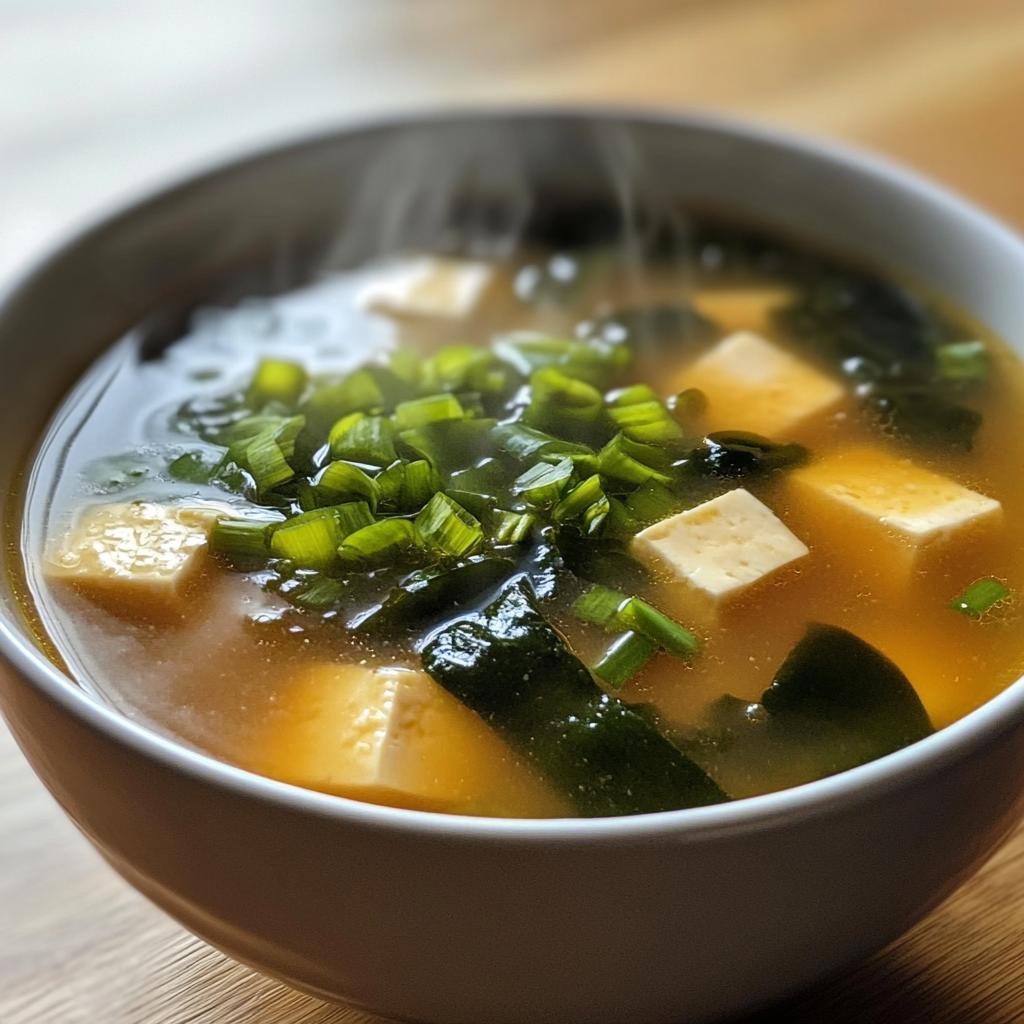
There’s something magical about a steaming bowl of miso soup—it’s like a warm hug in a bowl. I still remember my first sip of authentic miso soup in Tokyo, where the umami-rich broth and silky tofu made me fall in love instantly. Now, my homemade miso soup recipe is a staple in my kitchen—simple, quick, and packed with flavor. Whether you’re fighting off a cold or just craving comfort, this soup delivers. Plus, it’s loaded with gut-friendly probiotics from the miso paste. Trust me, once you try making it yourself, you’ll never go back to those instant packets again!
Why You’ll Love This Miso Soup Recipe
This miso soup recipe is my go-to for so many reasons—let me tell you why it’ll become yours too:
- Crazy quick: From pot to bowl in 15 minutes flat. Perfect for those “I need soup NOW” moments.
- Umami bomb: That deep, savory flavor from the miso paste? Pure comfort in every sip.
- Your soup, your rules: Toss in mushrooms, swap tofu for shrimp, or add noodles—it’s endlessly adaptable.
- Gut-friendly goodness: The fermented miso gives you probiotics that make your tummy happy.
- Pantry hero: Most ingredients last forever in your fridge or cupboard, ready for impromptu soup cravings.
Honestly, it’s the easiest way to feel fancy while barely trying. My kids call it “magic soup” because it somehow makes everything better—rainy days, colds, even Monday mornings.
Ingredients for Miso Soup
Here’s everything you’ll need for my go-to miso soup—I promise it’s all simple stuff you can find at any Asian market (or even most regular grocery stores these days!):
- 4 cups water (or substitute with vegetable broth for extra flavor)
- 1/4 cup miso paste (I prefer white for milder flavor, but red works great if you want it bolder)
- 1/2 cup firm tofu, cut into little cubes (silken works too if you like it extra soft)
- 1/4 cup dried wakame seaweed (just soak it in water for 5 minutes—it’ll puff up like magic!)
- 2 green onions, sliced thin (save some green tops for garnish)
- 1 tsp dashi powder (optional, but gives that authentic Japanese restaurant taste)
That’s it! Though I often toss in whatever veggies I have—a handful of spinach or some sliced mushrooms never hurt anyone.
How to Make Miso Soup
Okay, let’s make some magic happen! I’ll walk you through each step—it’s so simple, but there are a few tricks to get that perfect restaurant-quality taste at home. Just follow along and you’ll be slurping happiness in no time.
Step 1: Prepare the Broth
First, grab your favorite soup pot and pour in 4 cups of water. Set it over medium heat until you see those first tiny bubbles appear—that’s your cue it’s ready. If you’re using dashi powder (my secret weapon for extra umami), now’s the time to whisk it in until it dissolves completely. Important: Don’t let it boil like crazy—we’re aiming for a gentle simmer. Boiling kills miso’s delicate flavor, and we definitely don’t want that!
Step 2: Incorporate Miso Paste
Here’s where most people mess up—they just plop the miso in and stir. Nope! Turn the heat down to low and grab a small bowl. Scoop out about 1/2 cup of your hot broth into the bowl, then add your miso paste. Whisk it like you mean it until it’s completely smooth with no lumps. Now pour this miso mixture back into the pot. This tempering method prevents those pesky clumps—learned this trick from a Kyoto chef and never looked back!
Step 3: Add Tofu and Seaweed
Time for the fun stuff! Drop in your cubed tofu and that rehydrated wakame seaweed (it should be nice and plump after soaking). Give it all a gentle stir—no vigorous mixing, or your tofu will turn to crumbs. Let everything cozy up together in the broth for just 2-3 minutes. You’ll know it’s ready when the tofu warms through and the seaweed turns a vibrant green. Pro tip: If you’re adding veggies like spinach or mushrooms, toss them in now too!
Step 4: Finish and Serve
Okay, soup’s done—turn off the heat immediately! Miso’s a diva that hates overcooking. Now sprinkle in most of your sliced green onions (save some for pretty garnish), give one last stir, and ladle into bowls. Serve it steaming hot—the aroma alone will make your kitchen smell like a Tokyo ramen shop. Slurp it up quickly while it’s at its peak! (Though I won’t judge if you make happy noises while eating—I always do.)
Tips for the Best Miso Soup
After making this soup weekly for years, I’ve picked up some game-changing tricks:
- Never boil miso—it kills the probiotics and delicate flavor. Low heat only!
- Start with less miso, then taste and add more if needed—it’s easier to fix “too mild” than “too salty.”
- Throw in spinach or mushrooms during the last minute—they cook fast and add nutrients.
- Use a fine mesh strainer to dissolve miso if you’re lazy like me—no lumps guaranteed!
- Leftover soup? Store without green onions (they get slimy) and add fresh when reheating.
Trust me, these little tweaks make all the difference between good and “oh wow” miso soup!
Miso Soup Variations
One of my favorite things about miso soup is how easily you can change it up—it’s like a blank canvas for your cravings! Here are some of my go-to twists:
- Mushroom lover’s dream: Add shiitakes or enoki mushrooms when simmering the broth—their earthy flavor pairs perfectly.
- Protein boost: Toss in cooked shrimp or thinly sliced chicken along with the tofu.
- Noodle time: Stir in cooked soba or udon noodles at the end for a heartier meal.
- Vegan magic: Skip the dashi and use kombu seaweed broth instead—still packed with umami!
My neighbor even adds a spoon of peanut butter sometimes—sounds weird but oh man, it works!
Serving Suggestions
This miso soup is amazing on its own, but it’s even better with a side of sushi, steamed rice, or a crisp green salad. I love pairing it with a simple cucumber salad for a light, refreshing meal. Oh, and don’t forget a hot cup of green tea—it’s the perfect finishing touch!
Storage and Reheating
Listen, this soup is best fresh, but if you must store it (we’ve all been there), here’s the trick: cool it completely, then stash it in the fridge without the green onions—they turn into sad, slimy strands. It’ll keep for about 2 days max. When reheating, go low and slow on the stove—just until warm, never boiling—or the miso loses its magic. If it thickens up, add a splash of water to loosen it back to soup perfection. Easy peasy!
Miso Soup Nutrition
Here’s the beautiful thing about my miso soup—it’s comforting and good for you! A typical bowl (about 1 cup) packs roughly 80 calories with 5g of protein from that lovely tofu, plus 2g of fiber thanks to the seaweed. It’s low in fat but high in flavor, with all those gut-friendly probiotics from the fermented miso paste. Of course, exact numbers change if you add extras like mushrooms or noodles—but that’s the beauty of homemade! Just remember, the sodium can creep up (about 800mg per serving), so go easy if you’re watching salt. Either way, it’s nourishment you can feel good about slurping.
Frequently Asked Questions
Can I use yellow miso instead of white?
Absolutely! Yellow miso works great—it’s a bit stronger than white but milder than red. I actually keep all three in my fridge for different moods. Start with a little less than the recipe calls for, then taste and add more if needed. The beauty of miso soup is how flexible it is!
Is wakame seaweed essential?
Here’s my confession: I’ve made it without wakame when desperate, but it’s just not the same. That briny, oceanic flavor is what makes miso soup special! If you can’t find wakame, try nori sheets torn into pieces—not perfect, but better than nothing. Pro tip: Look for wakame in the international aisle or online—it lasts forever in your pantry!
Can I make this vegan?
Easy peasy! Just skip the dashi powder (which sometimes contains fish) and use kombu seaweed or mushroom broth instead. All the other ingredients—miso, tofu, veggies—are already plant-based. My vegan friends rave about this version!
Why does my miso soup taste bitter?
Oh no! That usually means the miso got too hot. Remember—never let it boil after adding the paste. Also, check your miso’s expiration date—old miso can develop off flavors. When in doubt, buy a fresh tub (they last months refrigerated) and try again.
Try this recipe and share your twist in the comments! Did you add mushrooms? Try red miso? I want to hear all about your miso adventures!
Print
15-Minute Miso Soup Recipe for Ultimate Comfort
- Total Time: 15 mins
- Yield: 4 servings 1x
- Diet: Vegetarian
Description
A simple and flavorful miso soup recipe that you can make at home.
Ingredients
- 4 cups water
- 1/4 cup miso paste
- 1/2 cup tofu, cubed
- 1/4 cup wakame seaweed, rehydrated
- 2 green onions, sliced
- 1 tsp dashi powder (optional)
Instructions
- Heat water in a pot until simmering.
- Add dashi powder if using and stir to dissolve.
- Lower heat and whisk in miso paste until fully dissolved.
- Add tofu and seaweed, simmer for 2-3 minutes.
- Remove from heat, stir in green onions.
- Serve immediately.
Notes
- Do not boil miso paste to preserve flavor.
- Adjust miso quantity for stronger or milder taste.
- Add vegetables like mushrooms or spinach if desired.
- Prep Time: 5 mins
- Cook Time: 10 mins
- Category: Soup
- Method: Stovetop
- Cuisine: Japanese
Nutrition
- Serving Size: 1 cup
- Calories: 80
- Sugar: 2g
- Sodium: 800mg
- Fat: 3g
- Saturated Fat: 0.5g
- Unsaturated Fat: 2g
- Trans Fat: 0g
- Carbohydrates: 8g
- Fiber: 2g
- Protein: 5g
- Cholesterol: 0mg
Keywords: miso soup, Japanese soup, tofu soup, seaweed soup