
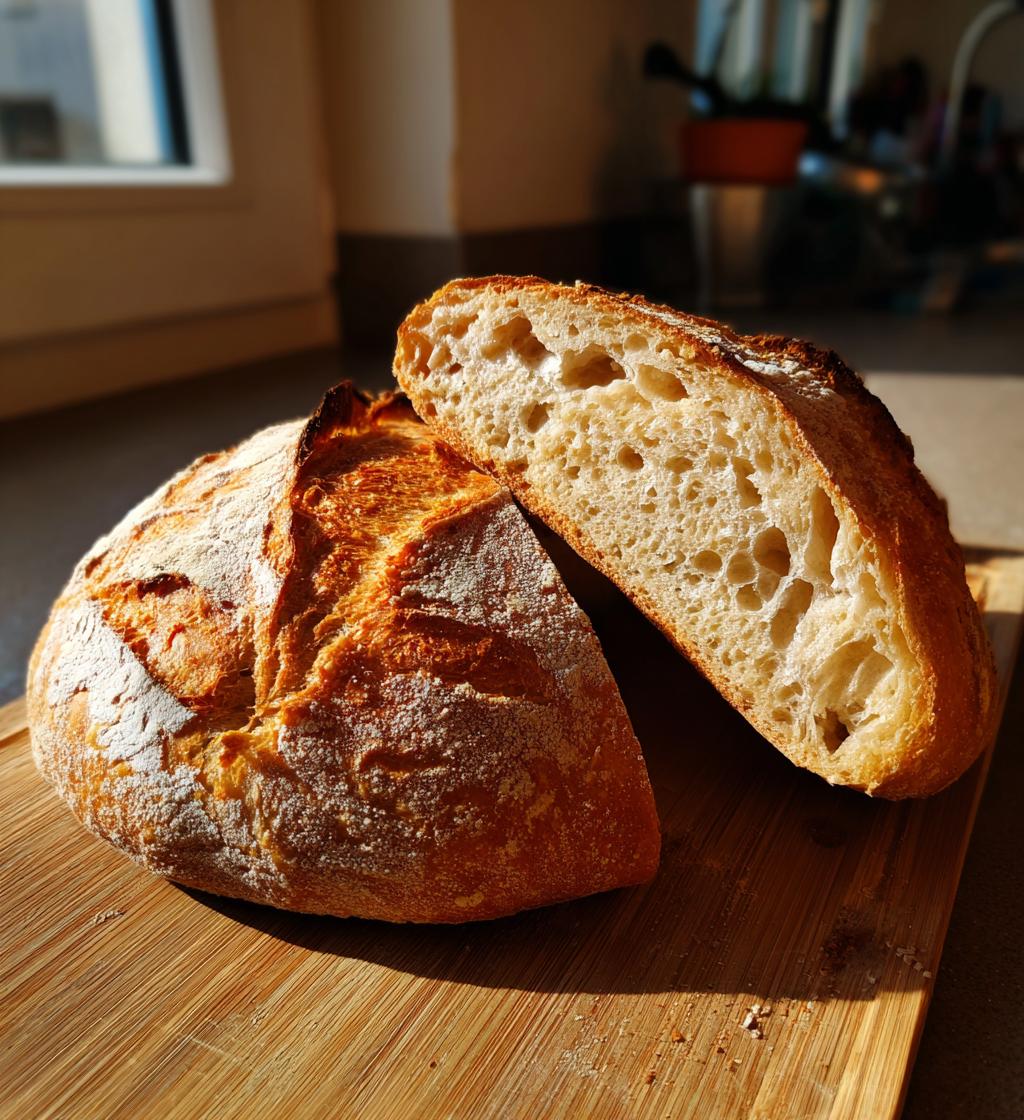
There’s something truly magical about making sourdough bread at home. This traditional bread, with its crusty exterior and chewy, flavorful crumb, connects us to centuries of baking history. I still remember the first time I baked my own loaf; the aroma that filled my kitchen was pure bliss! The key to this delightful bread lies in its natural starter, a living culture that has been nurtured and fed, just like a little pet. It’s fascinating how a simple mix of flour and water can transform into something so delicious over time.
What I love most about sourdough is its personality. No two loaves are ever exactly the same! The way each starter interacts with its environment makes every bake unique, and I can’t help but feel a sense of accomplishment when I pull a perfectly golden loaf from the oven. So, let’s dive into the process together and create your very own sourdough masterpiece!
Ingredients List
Here’s what you’ll need to create your own delightful sourdough bread. Trust me, having everything prepped and ready makes the process so much smoother!
- 500g bread flour: This is the backbone of your loaf. I prefer using a high-protein bread flour for that perfect structure and chew.
- 350ml water: Room temperature water works best. You want it to be warm, but not hot, so it helps activate the starter without killing it.
- 100g sourdough starter: Make sure your starter is bubbly and active! This is what gives your bread that unique flavor and rise. If you’re unsure, just feed it a few hours before starting your bake.
- 10g salt: Salt enhances flavor and strengthens the dough. I usually use fine sea salt, but any non-iodized salt will do. Just avoid table salt if you can!
Gather these ingredients, and you’re one step closer to baking a delicious loaf of sourdough bread. Let’s get mixing!
How to Prepare Sourdough Bread
Now that we’ve gathered our ingredients, it’s time to get our hands a little messy and dive into the exciting world of sourdough bread preparation! Trust me, this process is where the magic really happens.
Step 1: Mixing Ingredients
Start by grabbing a large mixing bowl. Add the 500g of bread flour and 350ml of water together, and mix them with a wooden spoon or your hands until everything is combined. You’re looking for a shaggy, slightly sticky dough. It shouldn’t be too wet, but it shouldn’t be dry either. If it feels too dry, just add a splash more water – it’s all about finding that perfect balance!
Step 2: Adding Starter and Salt
Once your flour and water are mixed, it’s time to add the star of the show: the 100g of sourdough starter! Gently incorporate it into the dough, breaking it up as you go. This is where things start to get bubbly and lively! Add in the 10g of salt next. I like to sprinkle it evenly over the dough and then squish it in; this helps it mix better. Remember, no need to overwork it yet!
Step 3: Kneading the Dough
Now comes the fun part: kneading! Flour your countertop (or keep it clean if you prefer) and turn the dough out onto it. Knead for about 10 minutes, which sounds like a lot, but trust me, it’s worth it! You want to develop that gluten, so keep folding and pushing the dough. It should become smooth and elastic. If it’s too sticky, don’t hesitate to dust your hands and the surface with a little flour.
Step 4: First Rise
Once your dough is kneaded to perfection, place it back in the bowl and cover it with a damp cloth or plastic wrap. Now, let it rise for about 4 hours in a warm environment. Aim for somewhere around 24-27°C (75-80°F) if you can. This is where the magic happens as the yeast works its wonders! You’ll know it’s ready when it’s doubled in size and looks nice and puffy.
Step 5: Shaping the Dough
After the first rise, turn your dough out onto a lightly floured surface. Gently stretch and fold it a few times to shape it into a round or oval loaf, depending on your preference. The aim here is to create surface tension by tucking the edges under. Once shaped, place it into a well-floured proofing basket. This helps it hold its shape while it proofs!
Step 6: Proofing the Dough
Cover your dough again and let it proof for about 2 hours. You’ll know it’s ready when it has puffed up and springs back slightly when you poke it with your finger. This is the time to be patient and let that sourdough personality shine through!
Step 7: Preheating the Oven
About 30 minutes before your dough is done proofing, preheat your oven to a sizzling 230°C (450°F). This ensures that your bread will get that amazing crispy crust! If you have a baking stone or Dutch oven, put it in there to heat up too.
Step 8: Baking the Bread
When your oven is hot and your dough is ready, it’s time to bake! Carefully turn the dough out onto a piece of parchment paper or directly into your preheated Dutch oven. Bake for 30 minutes. If you want an extra crispy crust, consider removing the lid halfway through the baking process!
Step 9: Cooling the Bread
Once your bread is beautifully golden brown, take it out of the oven and let it cool on a wire rack. I can’t stress this enough: give it at least 30 minutes before slicing. This cooling time allows the structure to set and enhances the flavor. Trust me, the wait is worth it!
Nutritional Information
When you’re enjoying a slice of homemade sourdough bread, it’s nice to know what’s in it! Here’s the estimated nutritional breakdown per serving (1 slice):
- Calories: 150
- Fat: 1g
- Saturated Fat: 0g
- Unsaturated Fat: 0g
- Trans Fat: 0g
- Carbohydrates: 30g
- Fiber: 2g
- Protein: 5g
- Sugar: 0.5g
- Sodium: 200mg
- Cholesterol: 0mg
Keep in mind that these values are estimates and can vary based on the specific ingredients you use and portion sizes. But knowing what’s in your bread only adds to the joy of baking and enjoying it! So go ahead, savor that slice, knowing it’s not just delicious but also packed with goodness!
Tips for Success
Baking sourdough bread can feel a bit daunting at first, but with a few pro tips, you’ll be well on your way to mastering it! First off, always ensure your sourdough starter is bubbly and active before you begin. A sluggish starter can lead to disappointing results. Trust me, feeding it and letting it sit for a few hours before use makes a world of difference!
Another important tip is to keep an eye on your dough during the rising process. If your kitchen is cold, consider placing the bowl in a slightly warm oven (just turned off) to encourage fermentation. Don’t rush the first rise; the longer it rises, the better the flavor will be.
Lastly, remember that every oven is different! Always keep an eye on your bread as it bakes. If it’s browning too quickly, don’t hesitate to cover it with foil. With these tips in your back pocket, you’re sure to impress everyone with your homemade sourdough bread!
Variations of Sourdough Bread
One of the best things about sourdough bread is its versatility! You can easily customize your loaf to suit your taste or to impress your friends. For a delightful twist, consider adding herbs like rosemary or thyme right into the dough. Just chop them finely and mix them in during the kneading stage. The aroma that fills your kitchen will be heavenly!
If you’re a fan of sweetness, try adding dried fruits like cranberries or apricots. They add a lovely pop of flavor and a chewy texture. You can also mix in nuts or seeds, like walnuts or sunflower seeds, for an added crunch. Just be sure not to overload the dough; a handful will do!
Feeling adventurous? Experiment with spices like cinnamon or even a touch of garlic powder for a savory version. These little additions can transform a classic loaf into something uniquely yours. So, don’t be afraid to get creative with your sourdough journey!
Storage & Reheating Instructions
Once you’ve baked your delicious sourdough bread and it’s cooled down, you’ll want to store it properly to keep that crusty exterior and soft interior intact. I recommend wrapping the loaf in a clean kitchen towel and placing it in a paper bag. This method helps maintain the crust’s crispy texture while preventing it from getting too soft or stale. If you plan on keeping it for longer, consider slicing the bread and storing it in an airtight container or plastic bag in the fridge. Just remember, bread tends to dry out in the fridge, so enjoy it within a few days!
When it comes to reheating, the best way to bring that fresh-baked flavor back is to pop your slices in the toaster or warm them in the oven. If you’re reheating a whole loaf, wrap it in foil and heat it at 180°C (350°F) for about 10-15 minutes. This will revive that crust and make it feel like it just came out of the oven!
FAQ Section
Q1: What can I do if my sourdough bread doesn’t rise?
If your sourdough bread isn’t rising, it might be due to an inactive starter. Make sure your starter is bubbly and has been recently fed before you start. If your kitchen is too cold, try moving the dough to a warmer spot to encourage fermentation.
Q2: How do I know when my bread is done baking?
You’ll know your sourdough bread is done when it’s beautifully golden brown and sounds hollow when tapped on the bottom. A thermometer can be helpful too; an internal temperature of around 90°C (190°F) means it’s ready!
Q3: Can I use whole wheat flour instead of bread flour?
Absolutely! You can substitute whole wheat flour, but keep in mind that it may produce a denser loaf. You might want to adjust the hydration slightly as whole wheat absorbs more water. Just remember to keep an eye on the dough’s texture!
Q4: How long does sourdough bread last?
Homemade sourdough bread is best enjoyed fresh, but it can last for about 3-5 days if stored properly. Remember to wrap it in a kitchen towel and place it in a paper bag to maintain that crusty exterior.
Q5: Can I freeze sourdough bread?
Yes! Sourdough bread freezes beautifully. Just slice it first, then wrap the slices tightly in plastic wrap or foil before placing them in a freezer bag. When you’re ready to enjoy, simply toast or reheat from frozen!

Sourdough Bread: 9 Steps to Baking Bliss at Home
- Total Time: 4 hours 45 minutes
- Yield: 1 loaf 1x
- Diet: Vegetarian
Description
A traditional bread made using a natural starter.
Ingredients
- 500g bread flour
- 350ml water
- 100g sourdough starter
- 10g salt
Instructions
- Mix flour and water in a bowl.
- Add sourdough starter and salt.
- Knead the dough for 10 minutes.
- Let the dough rise for 4 hours.
- Shape the dough and place it in a proofing basket.
- Let it proof for 2 hours.
- Preheat the oven to 230°C.
- Bake for 30 minutes.
- Cool before slicing.
Notes
- Use a kitchen scale for accuracy.
- Adjust water based on flour type.
- Longer proofing improves flavor.
- Prep Time: 15 minutes
- Cook Time: 30 minutes
- Category: Bread
- Method: Baking
- Cuisine: American
Nutrition
- Serving Size: 1 slice
- Calories: 150
- Sugar: 0.5g
- Sodium: 200mg
- Fat: 1g
- Saturated Fat: 0g
- Unsaturated Fat: 0g
- Trans Fat: 0g
- Carbohydrates: 30g
- Fiber: 2g
- Protein: 5g
- Cholesterol: 0mg
Keywords: sourdough bread, homemade bread, artisan bread